
Best Crypto Wallets With High Staking Rewards: A 2026 Deep Dive
Are you looking for best crypto wallets that are offering high rewards for staking your tokens? If yes, then you have reached the right place. Here we have prepared a curated list of top wallets for staking your crypto based on market research & data metrics like rewards, pros, cons, and many more.
Staking has evolved from a niche validator activity into a mainstream way for crypto holders to generate passive income. With proof-of-stake networks now securing the majority of blockchain value, choosing the right wallet for staking directly impacts your net returns, not just the advertised APY.
The difference between a 4% gross yield and a 3.2% net yield compounds significantly over a year.
This guide examines six leading wallets that combine security, usability, and competitive staking rewards, with a focus on what you actually earn after fees.
Trust Wallet
Trust Wallet has transformed from a simple mobile storage app into a comprehensive earning platform.
Owned by Binance but operating as a non-custodial wallet, it supports native staking for over 25 cryptocurrencies directly from your phone. The interface features a dedicated “Earn” button on the home page, eliminating the friction of navigating to external dApps.
Trust Wallet offers two distinct earning products. Stablecoin Earn lets you generate yield on USDT and USDC through DeFi lending protocols, with flexible withdrawal options and no lock-up periods. This appeals to users who want yield without price volatility.
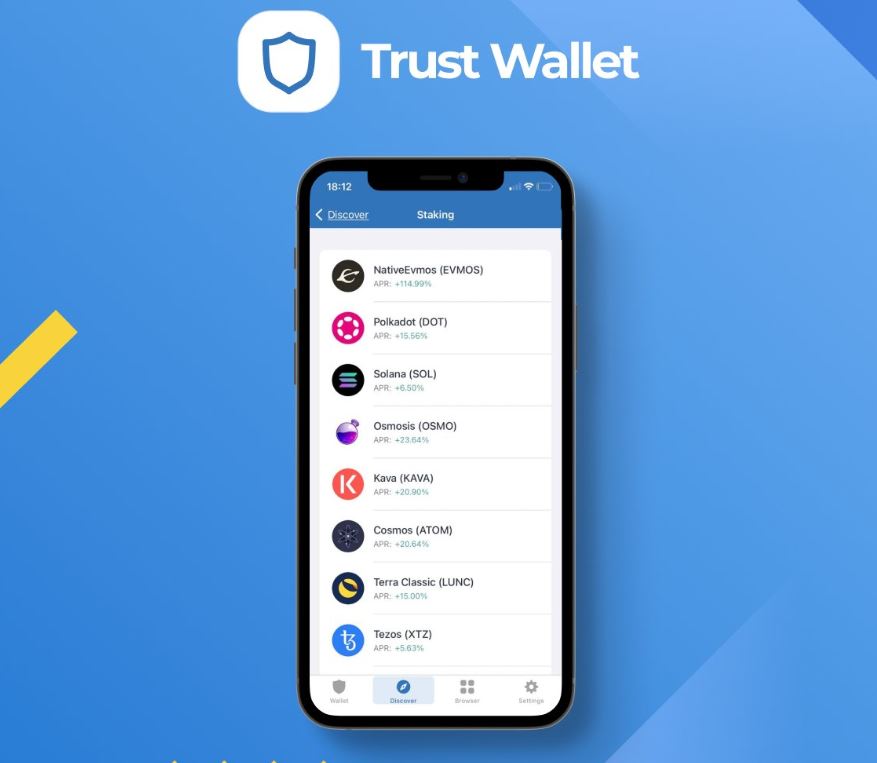
Native staking covers major proof-of-stake networks, with Ethereum rewarding approximately 2.91% APR and Solana offering around 7.04% APR.
The standout yields come from Cosmos (ATOM) at 16.38% APR and Polkadot (DOT) at 15.06% APR. These rates reflect the higher inflation and staking participation economics of those networks. Trust Wallet connects you to validators without requiring the 32 ETH minimum for solo staking, making it accessible for smaller holders.
Withdrawal periods vary by asset, Ethereum staking involves longer unbonding times, while stablecoin products maintain liquidity. The trade-off is that you’re relying on Trust Wallet’s curated validator selection rather than choosing your own.
| Pros | Cons |
|---|---|
| 25+ assets supported for staking | Validator selection limited to Trust Wallet’s curation |
| Stablecoin Earn offers liquidity with yield | APR fluctuates and isn’t guaranteed |
| No minimum stake for most assets | Mobile-first interface less ideal for desktop users |
| Self-custody maintained throughout | Some networks have lengthy unbonding periods |
Ledger Live
Ledger Live represents the gold standard for security-conscious stakers.
As the companion app for Ledger hardware wallets, it enables staking while keeping your private keys offline and protected from online threats. The Earn dashboard, accessible directly through the app, monitors rewards and discovers staking opportunities across multiple chains without navigating to external platforms.
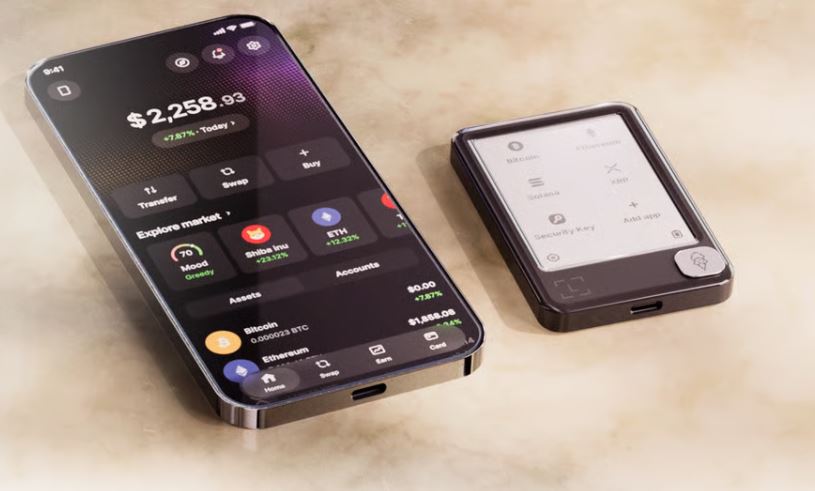
Ledger Live supports staking for Solana (SOL), Tezos (XTZ), Ethereum (ETH), Cardano (ADA), Cosmos (ATOM), NEAR Protocol, Osmosis (OSMO), and Lido Staked ETH (stETH). The integration with Lido for liquid staking means you can stake ETH and receive stETH, maintaining liquidity while earning rewards.
The platform displays both APR and APY, with the latter accounting for compound interest as rewards accumulate. This transparency helps you compare opportunities accurately. For Cardano staking, Ledger is often paired with Yoroi or Daedalus wallets, with rewards typically around 5%.
The primary limitation is that Ledger Live doesn’t support solo validator running.
You’re delegating to third-party validators through the app. Additionally, some assets require pairing with external wallet applications for staking functionality.
| Pros | Cons |
|---|---|
| Industry-leading hardware security | Requires purchasing Ledger device |
| Transparent APR/APY display | Solo validator running not supported |
| 8+ chains with native staking support | Some assets need external wallet pairing |
| Clean, unified earning dashboard | Less suitable for frequent traders |
Atomic Wallet
Atomic Wallet positions itself as a multi-chain powerhouse, supporting over 500 cryptocurrencies with built-in staking that requires no custody handoff. The wallet is available on desktop (Windows, Mac, Linux) and mobile, with a desktop-first design philosophy that appeals to users who prefer managing portfolios on larger screens.
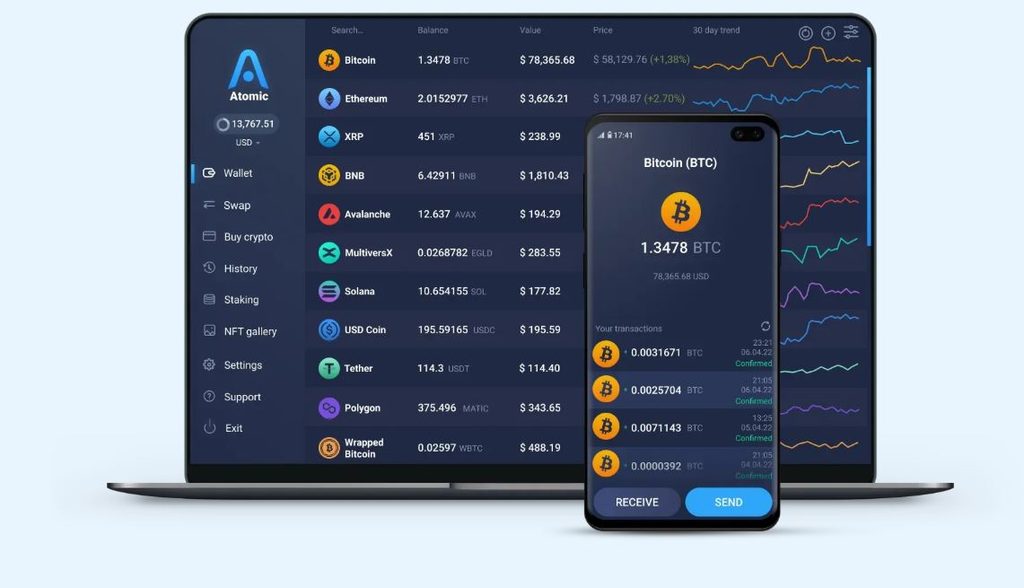
The headline staking opportunity is Solana, offering up to 7% APY with auto-compounding rewards. This places Atomic among the more competitive options for SOL holders who want to earn without running their own validator infrastructure. The built-in atomic swaps allow cross-asset exchanges without KYC, adding utility beyond staking.
However, Atomic Wallet is a generalist platform. Multi-chain wallets often can’t match the specialized features of Solana-native tools or Ethereum-focused staking solutions.
Staking rates and swap fees can vary over time, and the platform doesn’t offer the same depth of DeFi integrations as some competitors.
For users holding diverse portfolios who want a single interface for storage, swapping, and earning, Atomic provides a reasonable middle ground.
| Pros | Cons |
|---|---|
| 500+ assets supported | Generalist approach means less specialization |
| Solana staking up to 7% APY | Rates and fees can vary unpredictably |
| Built-in swaps without KYC | Not ideal for advanced DeFi strategies |
| Desktop and mobile applications | Limited validator customization |
Exodus Wallet
Exodus has built a reputation as the most beginner-friendly multi-chain wallet, and its staking capabilities reinforce that positioning. The wallet supports staking for a diverse range of assets including Solana, Cardano, Cosmos, Tezos, Algorand, Ontology, VeChain, and Ethereum through partners.
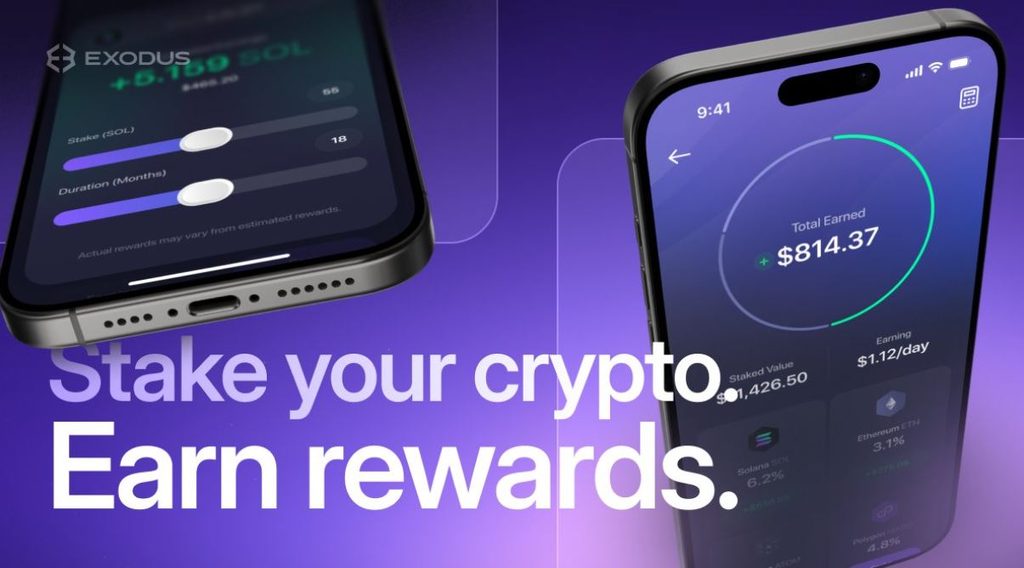
Average staking APY across supported assets sits around 7%.
What distinguishes Exodus is the user experience. Each stakeable asset has a dedicated “Earn” screen where you simply tap “Stake” and confirm, no validator selection required on most chains. For Cosmos and Cardano, Exodus delegates to a curated pool by default, removing the complexity of evaluating validators.
Staking mechanics vary by asset. Cardano (ADA) requires just 5 ADA minimum, with staked ADA remaining transferable and swapable, unusual flexibility. Cosmos (ATOM) has a 0.735 ATOM minimum but a 21-day unbonding period. Solana staking requires 1 SOL minimum with first rewards in 4-8 days.
Exodus also supports staking from Ledger and Trezor hardware wallets for select assets, bridging the gap between convenience and security. Trezor support is limited to Solana on mobile, while Ledger integration works across more assets.
| Pros | Cons |
|---|---|
| Extremely beginner-friendly interface | Default validator selection removes choice |
| Cardano staking remains liquid (transferable) | Some assets have long unbonding periods |
| Hardware wallet staking integration | APY not guaranteed and varies |
| Supports 8+ chains for native staking | No advanced validator metrics displayed |
Base Network (via GLIF)
Base, Coinbase’s Layer 2 network, has emerged as a hub for innovative staking strategies. The most compelling opportunity comes through GLIF, the liquid staking protocol originally built for Filecoin, which has expanded to Base with ICNT staking.

GLIF’s ICNT liquid staking offers variable APY between 12% and 18%, significantly higher than most native chain staking rates. The mechanism works by allowing you to deposit ICNT and receive stICNT, a yield-bearing derivative that represents your staked position plus accumulated rewards. This stICNT can then be deployed across Base DeFi protocols like Aerodrome or Moonwell to stack additional yields.
The process is straightforward: bridge or acquire ICNT on Base, connect a Web3 wallet (MetaMask and Coinbase Wallet both work), deposit into the GLIF staking pool, and receive stICNT. Rewards compound automatically, eliminating manual claim-and-restake cycles.
Base itself also supports USDC yields of approximately 4% through various protocols, with over 16,000 yield accounts actively rebalancing daily. The network’s low transaction fees make frequent compounding economically viable in ways that Ethereum mainnet cannot match.
The trade-off is complexity. Unlike wallet-native staking, GLIF requires interacting with a dApp, managing a liquid staking token, and understanding the risks of DeFi composability.
| Pros | Cons |
|---|---|
| 12-18% variable APY on ICNT | Requires dApp interaction, not wallet-native |
| Liquid staking token enables DeFi stacking | Higher complexity than simple staking |
| Base L2 low fees make compounding cheap | Variable rates depend on pool participation |
| Automated compounding | Smart contract risk exposure |
MetaMask
MetaMask’s staking approach reflects its identity as the world’s most-used EVM wallet. Rather than running its own validators, MetaMask integrates with established staking providers, primarily Lido and Stader, to offer ETH staking directly within the wallet.
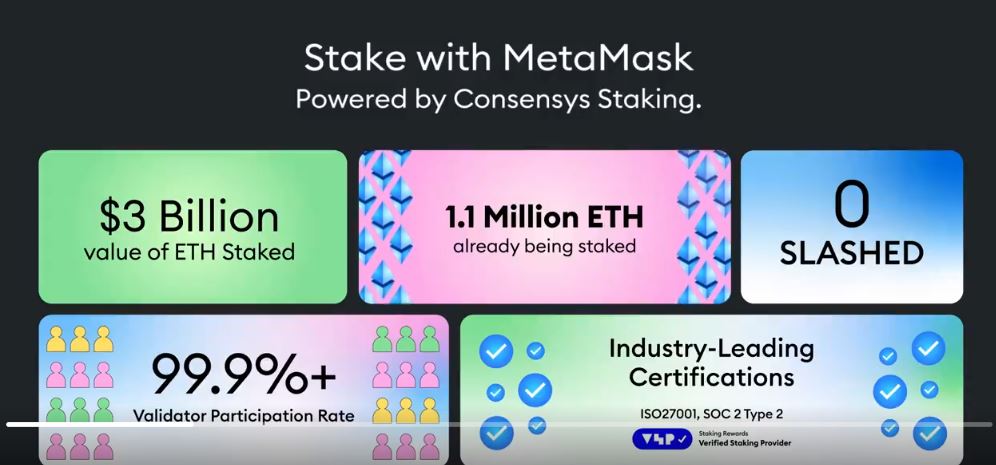
Staking ETH through MetaMask yields an average of 3.5% APY, with provider fees of 10% on rewards. The process is simple: navigate to the Portfolio page, click Stake, choose Lido for maximum liquidity or Stader for slightly higher APY, enter your amount, and confirm. You receive stETH or ETHx in return, liquid staking tokens that continue earning rewards while remaining usable across DeFi.
There’s no minimum stake for Lido integration, while Stader requires 0.1 ETH. The lock period is effectively none since you hold a liquid token, though redemptions back to ETH take 1-5 days.
MetaMask has also launched a Money Account built on Monad, offering up to 4% yield on stablecoins through Morpho and Aave integration. This expands the earning options beyond ETH staking.
The limitations are notable: you cannot run a native ETH validator through MetaMask, and the staking adds Lido/Stader smart contract risk on top of Ethereum’s native staking risk. The 10% provider fee cuts into returns compared to solo staking, though it eliminates the 32 ETH requirement.
| Pros | Cons |
|---|---|
| No minimum for ETH staking (Lido) | 10% provider fee reduces net yield |
| Liquid staking tokens remain usable | Cannot run native validator |
| 30M+ users, battle-tested security | Adds smart contract risk layers |
| Integrated stablecoin yield up to 4% | Gas costs not always pre-calculated |
Conclusion
The “best” wallet for staking depends on your priorities. Ledger Live wins for security-focused holders willing to purchase hardware. Trust Wallet offers the broadest asset selection with accessible yields. Exodus remains the most beginner-friendly. Atomic serves multi-chain holders seeking Solana exposure.
Base via GLIF delivers the highest raw yields but demands DeFi fluency. MetaMask provides unmatched convenience for existing users.
The critical insight for 2026: advertised APY rarely equals net yield. Provider fees, gas costs, and compounding mechanics all erode returns. Before staking, calculate your net APY by subtracting provider cuts from gross rates. A 5% gross yield with a 15% provider fee nets 4.25%, not the headline number.
Choose wallets that display clear fee structures and let you verify validator performance where possible. Your future self will thank you for doing the math upfront.